
Introduction
Usually, on my educational channels, I encourage individuals to buy businesses instead of build them from scratch. I took my own advice and so, I bought a fintech.
Context
Over these past two and a half years, I’ve made a living by consulting other businesses on how to grow. This business model came as a consequence of burnout. I’ve built and grown a fabrication business over the course of 8 years and, during the last 2 years of it, I simply didn’t want it anymore. It was a digital fabrication business and I sold it to an exhibition stand fabricator. Afterwards, I chose to spend my times on the sidelines of business, helping others, out of exhaustion. I didn’t want to have anything to my name anymore. To be completely honest, I barely wanted to cast a shadow on this planet. I was living my life one day at a time.
Well, I still do live my life one day at a time.
How I bought a fintech
While gathering experience advising other business owners on how they can grow the value of their business as an asset, I started developing my own niche – fintech. It was Nick Ramil who suggested I should double down on what I love. I recognize that my inclination towards fintech was the effect of my public procurement certification and years spent studying the implication of legal compliance for all my past ventures. Service businesses are fairly easy. Industrial businesses are a little more difficult. Fintechs however require a balanced approach of efficient revenue generation, secure technology and compliance.
My level of comfort with the fintech industry comes from my certifications, but I believe more so from my upbringing. To put it bluntly, I am a finance nepo baby. My mom led the alternative stock market in an emerging economy and later on became the GM of the national stock exchange, after the two had merged.
That type of financial institution being developed in an emerging market meant decades of regulatory tweaking, local systems that needed to be built and a whole lot of education. I was exposed to all that by simply hanging out at her office, surfing the internet, downloading my nu-metal albums of choice.
This year, I’ve had the opportunity to work as a fintech scout for Brinc VC. This meant that, in 2026 alone, I’ve been presented with over 50 fintech startups. This put me in a position of unfair advantage. I knew the current state of the market, I was aware of where the technology is and I understood all the ensuing liabilities. It was easy for me to choose safely. Well, to make a safe bet. A bet is still a bet, of course.
Why I bought a fintech
My bet was against AI for payment solutions. My bet is on AI-powered AML assessment, with transactions secured on the blockchain. My bet is in favor of the advancement of local fiscal policy.
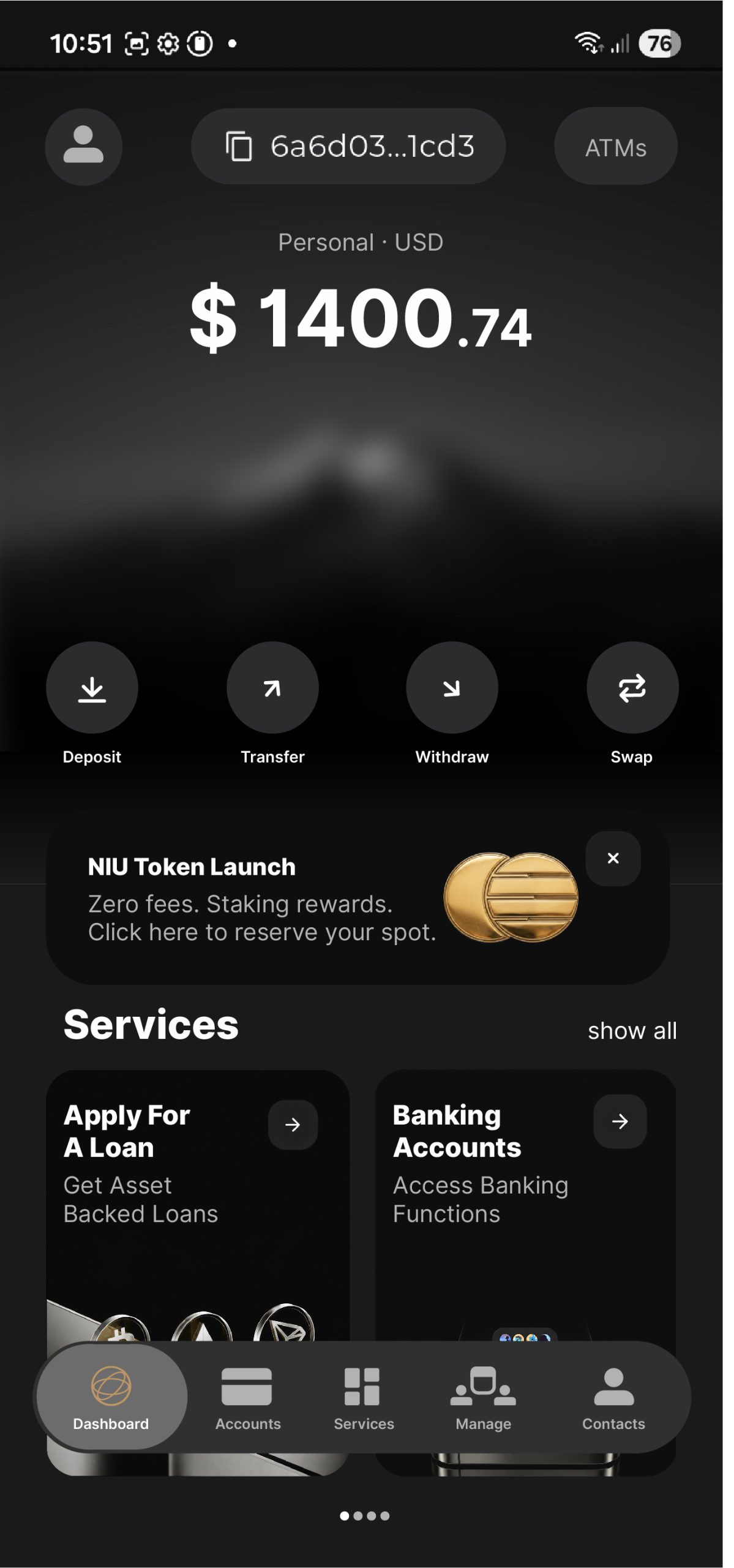
I bought a full technology stack for financial transactions. This includes neobanking, personal financing, a standalone authenticator app and crypto wallets. It also includes an entire crypto exchange.
Here is a breakdown of the value I see in these technologies:
- Neobanking: lower transaction fees, faster payments, better UX/UI, a more agile form of banking.
- Personal financing: the highest ROI in the commercial banking industry.
- Authenticator app: I see some traditional banks go back to OTP SMS systems from third party providers and I believe they do so to protect the bottom line of their financial reporting. Authentication should be managed internally for safety reasons, now that cybersecurity is actually a threat, not just theoretical.
- Web app alternative to the mobile app: because some people choose to not use their phones out of mental health concerns. I would also argue that a laptop is more secure than a mobile phone.
- Crypto wallet: stablecoins are slowly becoming a legitimate form of payment, with laws in place.
- Crypto exchange: a gateway between traditional currencies and digital currencies, consolidated through a network of proprietary ATMs.
- Admin panel: the opportunity switch on/off certain features according to jurisdiction and economic environment without having to do major software overhauls.
A future-proof software architecture
My doctoral research cited software architecture as a concept evolving first from traditional architecture and, in time, becoming a standalone field which eventually led to its own developments and breakthroughs. I argued that contemporary traditional architecture is now in a position in which it should borrow from software architecture breakthroughs to make it antifragile. As an architect, one of my favorite features of the technology I acquired is modularity. This feature is what allows any business owner to choose one or several functionalities depending on their network and their environment.
Now that I bought a fintech, what’s next?
My team and I at NuMoney are currently conducting our Seed round. In order to best serve our investors, maximise their upside while minimizing their risk, we’ve planned a mixed round of:
- Tokens via our ICO. NIU tokens will be utility tokens for our fintech platforms. Token holders will benefit from zero fees and favorable financing conditions. They will also have the possibility to stake our token
- Equity in our operational companies in several jurisdictions. Investors will have the possibility to own a considerable stake in the jurisdiction of their choice and benefit from the upside from business development such as transaction fees, ATM fees, FX spreads and, most importantly, local government relationships as NuMoney offers B2G solutions of EasyTax™ and agentic AML.
- White label software. Business partners will own their own technology stack of their choice, audited for cybersecurity, compliance-first. All they have to do is go and raise money with it. Or simply operate it as their own fintech.
- Blockchain co-ownership. Our dev team at NuMoney has developed a latest generation blockchain, with neural network logic, quantum-secure. It facilitates the fastest transactions in the industry and its security level make it ideal for government applications such as tax collection, AML and defense supply chain management (the latter for which I am very passionate, as you can see in this video on Defense Industry Accountability).
The NuMoney Team
I value my team at NuMoney and I am very lucky to have them. I truly believe our dev team is one of the best blockchain dev teams in the world, and my cofounder is one of the most highly skilled digital asset fiscal policy specialists in the world. Governments seem to also agree, as he is constantly invited to develop digital asset fiscal policies in emerging markets. Ghana’s VASP regulatory sandbox from today is the result of a fruitful collaboration between my cofounder, Arman Nalbandjan and the Ghana National Bank together with the Ghanaian SEC.
You can do it too.
If you are a digital asset enthusiast, either private or acting on behalf of the government, we’d love to hear from you. Or if you just want to own your own fintech, safely and profitably, reach out and I will point you in the right direction. We’ll take it one day at a time.